October 25, 2026
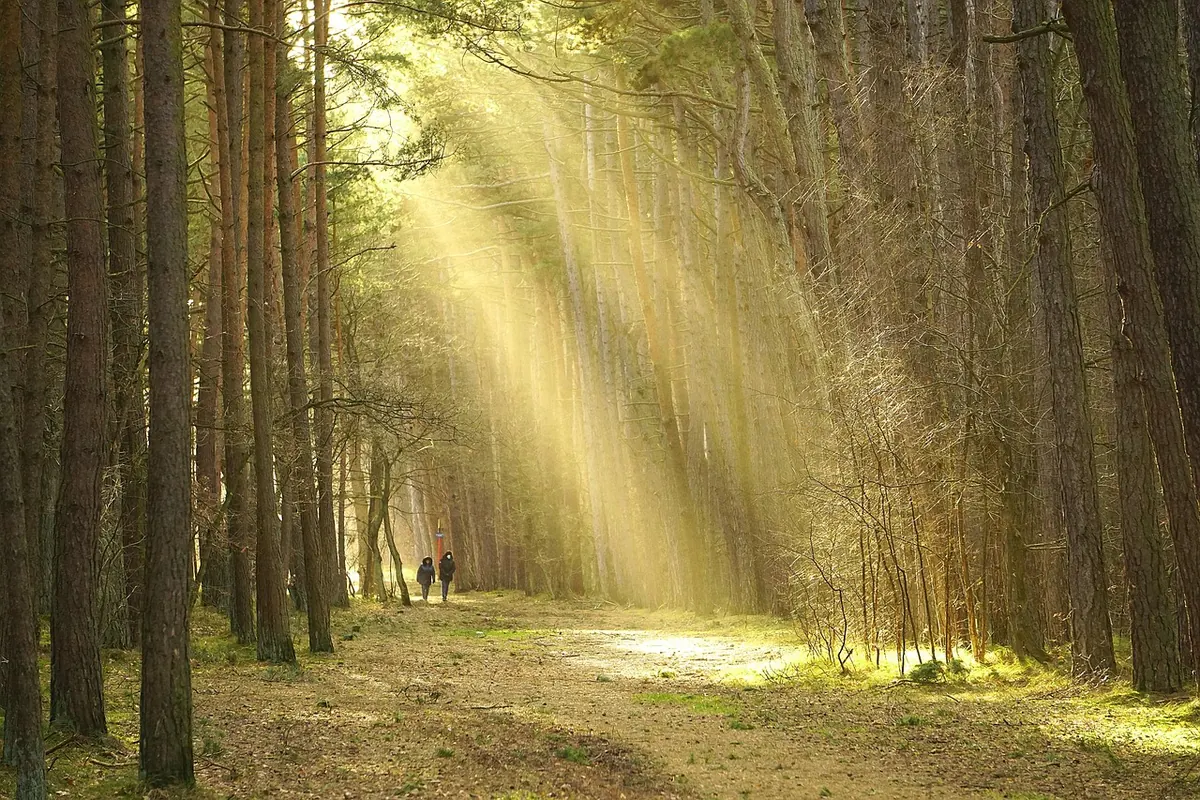
Most mornings, the same four blocks go by without a second look. The same hedge, the same cracked paving, the same neighbour wheeling a bin to the kerb. Then one day you walk them slowly, without headphones, and the street turns out to be full of material: a chair left out for whoever wants it, a window box planted in old tins, a hand-written sign taped to a lamppost. A neighborhood walk becomes a reflection practice at the point where you stop treating it as transport and start treating it as a place. Here is how to do that in about twenty minutes a day, using nothing you don't already own.
Why a Familiar Street Beats a Blank Page
Reflection usually fails for a boring reason: the blank page asks too much. Sit down and try to think about your life and the mind either freezes or reaches for the same three worries it always reaches for. A neighborhood gets around this by giving you something concrete to look at first. The thinking arrives afterwards, sideways, while you are busy noticing a gate.
The repetition matters more than the scenery. A new route is stimulating but useless as a baseline; you can't tell what has changed if you've never seen it before. Walk the same loop four or five mornings a week and the block becomes a measuring stick. The lilac that was in bud last Tuesday is out. The corner shop that was always half-empty is now properly empty, shutters down, post piled behind the glass. The scaffolding came down and the building underneath looks smaller than you remembered. Noticing change in a familiar place is one of the simplest ways to notice change in yourself, and it costs nothing.
There is a practical side to it as well. Walking occupies the part of the mind that fidgets, so the rest of it can wander productively. Many people find that a steady, unhurried pace loosens the grip of rehearsed worries. You don't have to take that on faith. Try one loop with nothing in your ears and see what surfaces by the third block.
The Two-Minute Setup
Aimless walking tends to collapse into either errands or scrolling. A little structure before you leave keeps it from doing either.
- Choose a length, not a destination. Fifteen to twenty minutes, ending back where you started. A loop is easier to repeat than an out-and-back, and repetition is the whole point.
- Phone in the pocket, not the hand. If you want photographs, take them, but take them at the end or you'll spend the walk composing rather than looking.
- Carry one loose question. Not "what am I doing with my life" — that's too heavy to hold while crossing a road. Something like: What have I stopped noticing? What did I say yes to this week? Who did I mean to call?
- Bring one small way to record a line. A notebook, the back of a receipt, a note on your phone. One line. Not a journal entry.
Notice what isn't on that list: a podcast, a step target, a route to optimise. The walk is not a workout with philosophical ambitions. It is a slow look at where you live.
Four Ways of Looking
Variety keeps the practice alive, and different lenses pull out different thoughts. Pick one per walk rather than trying all four at once.
1. One thing, closely
Choose a single object on the route and give it three sentences. A drainpipe, a gate latch, the brass plate under a doorbell with a name still on it. Resist interpretation at first; just describe. Detail work slows the eye down, and a slowed eye is the doorway into a slowed mind. You will be surprised how often the object you picked turns out to be doing something for you — the gate that someone still oils, the step worn into a curve by a hundred years of feet.
2. The people who are already out
Every neighborhood has its early cast: the man who waters the tree pit, the woman who opens the bakery alone at half six, the two retired neighbours who have the same argument about parking every week. Watching without staring is a lesson in scale. These are lives as complete and as complicated as yours, running on parallel track.
3. Sound and smell
Shut your eyes for ten seconds at a corner you know well. What's the layered sound of the block at this hour — a delivery van, a gate, a kettle through an open window? Smell is the sharpest memory trigger we have, and it works in both directions: the smell of a wet pavement can put you back in a school playground before you've decided to go there.
4. What has changed since last week
This is the reflective lens. Compare the block against your memory of it. New paint. A dead plant. A "for sale" board. Then ask the same question about your own week, gently, without turning it into an audit.
Turning Noticed Things Into Reflection
The walk is the raw material; the reflection happens in the three minutes after it. A short, repeatable sequence works better than a long one you'll skip.
- Name the thing that stayed with you. Not the most interesting thing — the one that stuck. A pram left outside a door in the rain, a chalk hopscotch grid, a bench with a fresh plaque.
- Ask one question of it. Why did that catch me? What does it remind me of? Whose habit is that?
- Follow the thread for a single paragraph. Three or four sentences. Then stop, even if it's going well. Stopping early is what makes you willing to come back tomorrow.
- End with one line you'd actually tell someone. If it isn't worth saying out loud to a friend, it's probably not the real thought.
Prompts that work well on a slow walk: what have I been walking past? What here is being looked after, and by whom? What would I miss if this street changed?
A Week of Prompts
If you'd rather not invent your own, borrow these. One per morning, same loop, no pressure to produce anything profound.
- Monday: Find three things on this route that somebody maintains on purpose.
- Tuesday: Walk the loop at half your usual speed. What do you hear that you normally don't?
- Wednesday: Notice one boundary — a wall, a fence, a line of trees. Where are your own, and who put them there?
- Thursday: Look for evidence that someone around here is kind when nobody's watching.
- Friday: What has changed on this street in a year? What has changed in you?
- Saturday: Take a turning you've never taken. Stay within ten minutes of home.
- Sunday: Walk the same loop and find the one spot you'd keep if you could keep only one.
On the Days It Doesn't Work
Some mornings the street is just a street. Grey light, wet bins, nothing to say. That isn't failure; it's weather, and it happens to everyone who keeps a practice for more than a fortnight. Two things help. First, shorten it. Five minutes round the block still counts and keeps the habit threaded through the week. Second, let the walk be dull. A reflection practice that only tolerates interesting mornings isn't a practice, it's a mood. The dull walk is often the one that later turns out to have been doing quiet work.
If a walk consistently brings up something heavy — persistent low mood, sleeplessness, worry that won't settle — a daily stroll is not the right tool on its own. Speak to a doctor or a qualified mental health professional. Reflection is a good companion to proper support, not a substitute for it.
Starting Tomorrow: A Twenty-Minute Script
Keep it small enough that you'd do it on a bad day. Two minutes before you leave: pocket the phone, pick one loose question, decide on a loop. Fifteen minutes walking at a pace that lets you look at things. Three minutes afterwards, sitting down, writing four sentences and one line worth keeping. That's the whole practice.
Do it for a week before you judge it. By the seventh morning you'll have a baseline — the hedge, the gate, the woman with the bin — and a small, unglamorous record of what you noticed while everyone else was getting somewhere. The neighborhood doesn't change much. You will, slightly, which is the point.
Photo: Nowaja / Pixabay